2nd ITU’s Advanced Training on Spectrum Monitoring Launched in Chengdu
May 23, 2016
As
the World Telecommunication and Information Society Day (WTISD) approaching,
the 2nd CoE training program on spectrum monitoring jointly held by
ITU and the State Radio Monitoring Center (SRMC) / the State Radio Spectrum
Management Center (SRSMC) was opened on May 16th in Chengdu, China. The Program
Director of the Telecommunication Development Bureau (BDT) in ITU Aamir Riaz,
the Deputy Director General of the Bureau of Radio Regulation under the
Ministry of Industry and Information Technology (MIIT) Kan Runtian, the
Director of SRMC Liu Yan, and the Vice Director of Commission of Economic and
Information commission of Sichuan Li Jianjiang attended and delivered speeches
at the opening ceremony. The Deputy Director and Chief Engineer of SRMC Li
Jingchun presided over the opening ceremony for the training.
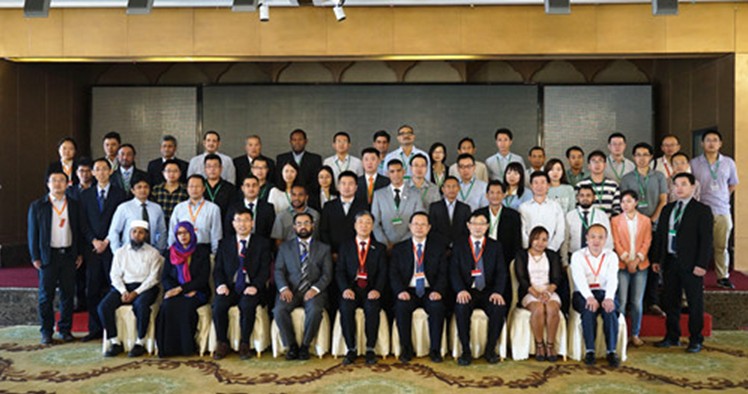
27
people from 13 countries including India, Vanuatu, Indonesia, United Arab
Emirates and 18 people from China participate in the training.
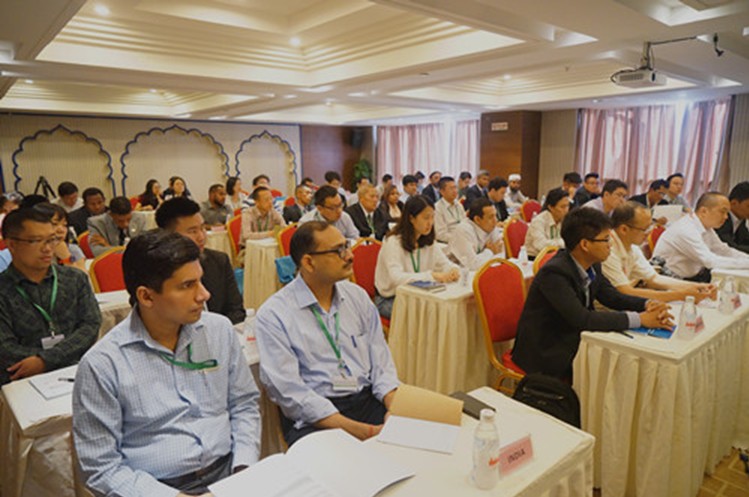
Liu Yan expressed his warm welcome to
trainees on behalf of SRMC. He said that SRMC successfully held 2 training
events under the CoE programs in 2015, and the ITU-D Director Mr. SANOU Brahlam
was very satisfied with it. This year, SRMC drew from the experience of the
previous events, and prepared the current training courses by paying special
attention to the training plan, trainers, materials, venues, and
accommodations, to ensure the smooth progress of the training. He hoped that
colleagues from different countries could improve business abilities and
promote mutual understanding via the training and communication.
Kan
Runtian said in his speech that China
appreciates the efforts made by the ITU in promoting ICT application,
eliminating the "digital divide" and promoting sustainable
development. China has initiate and implemented a plan of action named
“Internet +" and the "made in China" 2025 "national
strategies to sticks to its core functions of spectrum management, committed to
improving spectrum efficiency, optimize the environment for spectrum uses, with
an objective to facilitate the development of industry and the deepening of the
information society. “With the increasing demand for spectrum, conflicts among
different services highlighted the importance of a reliable electromagnetic
environment. To solve these issues it will require everyone in the room to work
in joint hands, improve our communication and coordination in spectrum
management and monitoring, with a view to a better management of this precious
resource under the framework of ITU activities”, he said.
Aamir Riaz said that radio spectrum plays a crucial
role in the development of wireless technologies and services. As the rapid
evolution of wireless technologies and competition for some preferred frequency
bands, administrations and regulators start to face the issues related to spectrum
economics,spectrum
re-farming,spectrum monitoring,interference mitigation etc. As the specialized agency of United
Nations in the domain of ICTs, ITU issue a number of publications on National
Spectrum Management, Spectrum Monitoring, Computer Aided Techniques for
Spectrum Management,and many more recommendations and reports. Beyond that, ITU also conduct seminars, capacity-building
sessions and prepare other training materials in order to help administrations – especially those in
developing countries, to link the gap between concepts of Spectrum Management
and their real life practical application. The CoE training is a platform for colleagues
all over the world to spread experiences in radio spectrum management and
monitoring, make a contribution to the development of ICTs together.
As the major manufacturing base of domestic
radio spectrum monitoring equipments, Li Jianjiang introduced the actuality of
the industry in Sichuan Province.
During the six-day training, specialists
from ITU and SRMC will provide English-spoken courses covers Spectrum
Monitoring Basic Introduction, Radio Monitoring Capacity and Tendency, Radio
Equipment Management, etc. To enhance the actual operation ability of students,
the training also increase the proportion of practice, for example, organize
visit to radio monitoring stations and manufacturers, and divide students into
groups to find out the interference signals in competition.
(Translating and editing by Gan Ni)